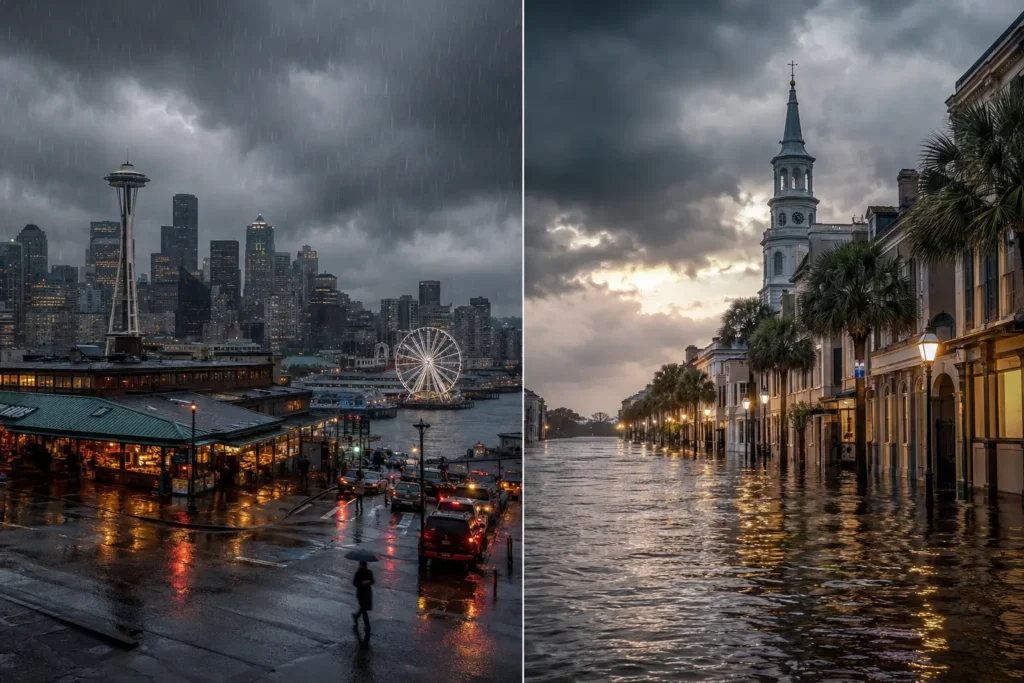
Water damage restoration Seattle WA homeowners need is one of the most misunderstood topics in home repair, and the confusion gets even worse when you compare Seattle’s challenges to what coastal cities like Charleston, South Carolina deal with. These two cities sit on opposite ends of the country, face completely different flood sources, and require different restoration approaches, yet the urgency of response is identical in both places.
If you have ever wondered why some restoration companies handle your situation better than others, the answer usually comes down to regional expertise. This guide compares Seattle and Charleston head to head, so homeowners in both cities understand exactly what they are dealing with and what to expect from a professional response.
Two Cities, Two Very Different Flood Problems
Seattle and Charleston are both waterfront cities with a reputation for wet conditions, but the nature of that wetness is fundamentally different.
Seattle sits in the Pacific Northwest where rainfall is consistent, frequent, and relatively gentle throughout most of the year. The city averages around 38 inches of annual rainfall, but that number is spread across many rainy days rather than concentrated into intense storm events. What causes water damage in Seattle is often long-duration low-intensity rain that saturates soil, overwhelms aging drainage systems in older neighborhoods like Fremont and Beacon Hill, and finds its way into basements, crawl spaces, and roofing systems over time.
Charleston, South Carolina, operates in a completely different weather reality. The city sits at sea level where three rivers meet the Atlantic coast, and it deals with intense, concentrated storm events, tidal flooding that happens even without rain, and hurricane season from June through November that can deliver 10 or more inches of rain in a single day.
Here is what separates the two at a fundamental level:
- Seattle water damage — usually freshwater, relatively slow onset, primarily driven by rain volume and drainage failure
- Charleston water damage — frequently involves saltwater or contaminated floodwater, rapid onset, driven by tidal surge, storm systems, and river overflow simultaneously
Both demand fast professional response. The equipment, protocols, and expertise required are different.
Seattle’s Biggest Water Damage Risks
Seattle homeowners deal with water damage risks that are directly tied to the city’s geography, climate, and housing stock.
Persistent moisture accumulation is the most common driver. Unlike cities with dry seasons that allow structures to fully dry out, Seattle’s consistent rainfall means that small leaks, minor roof issues, and crawl space moisture problems compound quietly over months before becoming visible. By the time a homeowner notices a water stain or a soft floor, the underlying damage has often been developing for a long time.
Roof and gutter failure during heavy rainfall events is a leading cause of interior water intrusion in Seattle. The Pacific Northwest sees extended periods of above-average rainfall, particularly from October through March, and roofing systems that have not been inspected or maintained deteriorate faster in this environment than in drier climates.
Crawl space flooding is particularly common in Seattle’s older housing stock. Many homes in neighborhoods like Ballard, Georgetown, and South Park were built without modern waterproofing standards, and groundwater seepage into crawl spaces creates persistent humidity problems that feed mold growth from below.
Our moisture detection services use thermal imaging cameras and calibrated moisture meters to find water that has migrated into wall cavities, under flooring, and into structural framing where it remains invisible until the damage is already serious.
When flooding does reach interior spaces, our flood water removal team deploys industrial extraction equipment that removes water at a rate that residential shop vacuums and mops simply cannot match. Speed in extraction directly determines how much flooring and drywall can be saved versus replaced.
Charleston SC’s Unique Water Damage Challenges
If Seattle’s water damage tends to be slow and accumulative, Charleston’s tends to be sudden, dramatic, and complicated by factors that most restoration companies are not prepared to handle.
Charleston is one of the most flood-exposed cities in the United States. The historic Peninsula, West Ashley, James Island, and areas near the Ashley and Cooper rivers all face regular flooding from multiple sources at once. A single moderate storm event can bring rainfall from above, tidal surge pushing through storm drains from below, and river overflow affecting streets and properties simultaneously.
The saltwater problem is what makes Charleston flood cleanup genuinely specialized work. When saltwater from tidal surge or hurricane flooding enters a home, it does not behave like freshwater. Salt accelerates corrosion of metal fasteners, electrical wiring, and HVAC components at a rate that continues after the visible water is removed. It also draws moisture back into building materials during humid weather cycles, which is why homes treated with standard drying protocols sometimes develop secondary mold or structural problems weeks after the initial restoration appeared complete.
Charleston’s humidity, consistently above 70% year-round, also means that mold development timelines are significantly compressed compared to Seattle. Where a Seattle homeowner might have 36 to 48 hours before mold colonization becomes a serious risk, a Charleston homeowner in summer conditions may be looking at 18 to 24 hours.
For homeowners dealing with these specific challenges, professional water damage restoration Charleston SC teams who understand coastal flood patterns and saltwater protocols provide a meaningfully different outcome than general restoration companies without that specialized coastal experience.
According to FEMA’s flood map service center, Charleston County has some of the highest flood risk designations in the entire southeastern United States, which directly affects insurance requirements, restoration timelines, and the scope of professional work needed after any significant water event.
What Both Cities Share – The First 48 Hours Rule
Despite the differences in flood source, climate, and building materials, one principle applies equally in Seattle, Charleston, and every city in between: the first 48 hours after water damage occurs determine the majority of your final restoration cost.
Homeowners who wait until the next morning, delay calling professionals while trying to manage the situation themselves, or underestimate the extent of moisture migration consistently end up paying significantly more than those who act immediately. Here is what happens during those first 48 hours that makes the timeline so critical:
- Wet drywall begins losing structural integrity and absorbing mold spores from ambient air
- Subfloor materials begin cupping, warping, and separating from fasteners
- In Charleston specifically, saltwater continues corroding metal components even after visible water is removed
- Odor compounds from bacteria and mold bond to surfaces and become increasingly difficult to eliminate
Professional restoration equipment changes these timelines in ways that DIY effort cannot. Our structural drying process uses industrial air movers and commercial dehumidifiers running together to create the airflow conditions that pull moisture out of structural materials, not just from surfaces. Thermal imaging confirms drying progress inside walls before they are closed.
Mold – The Secondary Problem That Becomes the Main One
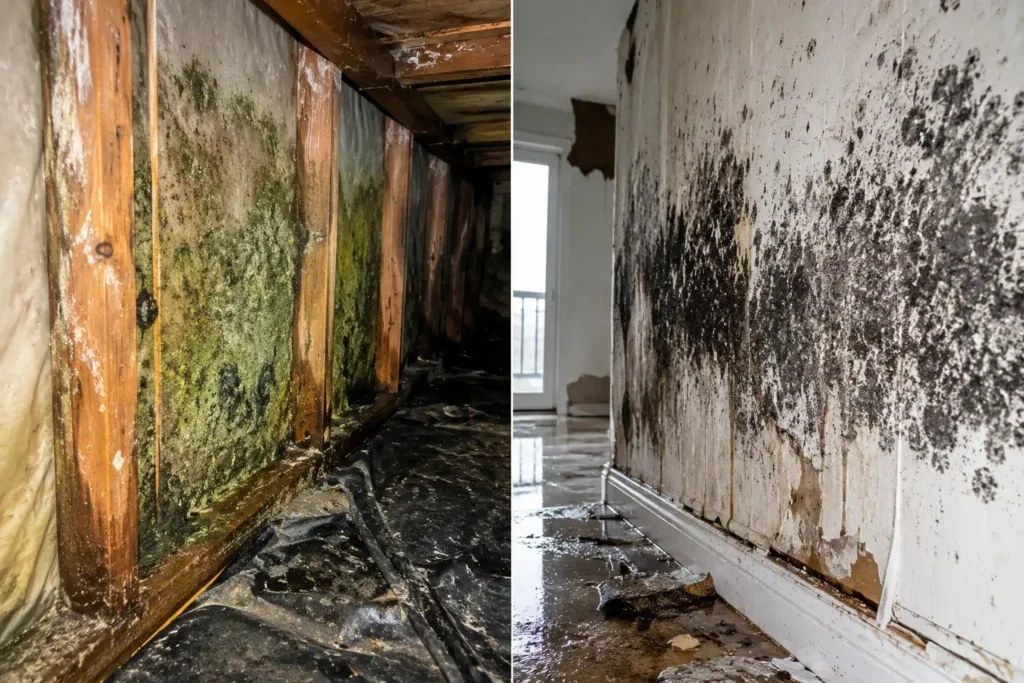
In both Seattle and Charleston, mold is the outcome that homeowners fear most after water damage, and for good reason. Mold causes structural damage, creates serious indoor air quality problems, and dramatically increases restoration costs when it is not caught early.
Our mold inspection and removal service is integrated into our water damage response process because we have seen too many situations where a water damage job that appeared complete led to a mold remediation call three weeks later. Proper moisture verification with calibrated equipment before closing walls is the step that prevents that outcome.
In Seattle, mold most commonly develops in crawl spaces, attic spaces, and behind walls in bathrooms and laundry rooms where moisture accumulates slowly. In Charleston, mold after flooding can affect entire lower levels of a home within days if saltwater-contaminated materials are not removed and the space is not properly dried and treated.
Choosing the Right Restoration Company for Your Region
Not every restoration company understands regional water damage. When evaluating any company in Seattle, Charleston, or anywhere else, ask these questions directly before agreeing to any work:
- Are they IICRC certified? This is the industry standard that confirms proper training and equipment protocols.
- Do they have specific experience with your type of water damage, whether that is Pacific Northwest rain accumulation, crawl space flooding, coastal saltwater surge, or plumbing failure?
- Do they provide a written scope of work with itemized costs before starting?
- Are they available 24 hours a day, including weekends and holidays?
A company that cannot answer yes to all four of those questions is not the right company for a significant water damage event in either city.
For Seattle and greater Puget Sound homeowners, our team at MaxPro responds within 60 minutes across the region. Reach out through our contact page for a free same-day assessment or call us on (253) 289-3960 if you are dealing with an active emergency right now.
Leave a Reply