Water damage restoration Peoria IL calls follow a pattern every spring, and Seattle homeowners see the same thing every winter. The water event itself is fast, sometimes over in hours. But what comes after catches most people completely off guard, not because the process is complicated, but because nobody tells them upfront how long it actually takes from start to finish.
This guide breaks down the real restoration timeline, week by week, so you know exactly what’s happening at each stage, why it takes as long as it does, and what you can do to keep the process moving forward.
Why the Timeline Varies Between Seattle and Peoria
Before getting into the week-by-week breakdown, it helps to understand why regional conditions affect how long restoration takes.
In Seattle, the primary drivers are persistent rainfall, roof leaks, and Puget Sound storm surges. The Pacific Northwest climate keeps ambient humidity consistently high, which slows commercial drying equipment and extends the structural drying phase. Homes in neighborhoods like Queen Anne, Ballard, and Fremont often deal with chronic moisture issues that complicate what looks like a simple water event.
In Peoria IL, the Illinois River drives seasonal groundwater flooding from March through June. Spring snowmelt pushes the water table up fast, and the combination of older block-foundation homes and high spring humidity creates similar drying challenges to Seattle, just during a different season. Homeowners dealing with water damage restoration Peoria IL situations often find the drying phase takes longer than national averages suggest, precisely because of this seasonal humidity factor.
Both cities share one thing, the faster professional equipment gets on site, the shorter the total timeline.
Week One – Extraction, Assessment, and Structural Drying
The first week is the most critical and the most active. Everything that happens during week one determines how much the total scope of work expands.
Days 1 to 2 – Emergency extraction and assessment
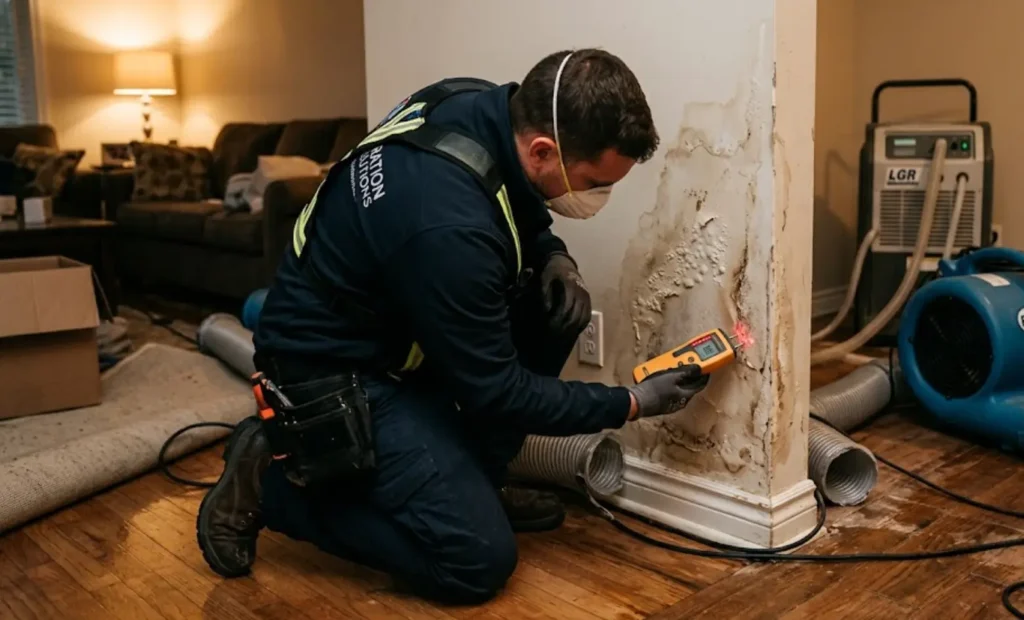
Standing water gets removed using truck-mounted extractors within the first few hours. At the same time, technicians perform a full moisture detection services assessment, mapping moisture levels in every affected wall, floor, and ceiling using thermal imaging and moisture meters. This step matters because water travels fast and often ends up in areas that look completely dry on the surface.
Days 3 to 5 – Structural drying begins
Commercial air movers and dehumidifiers get placed based on the moisture map. The structural drying process runs continuously, with technicians returning daily to check readings and adjust equipment placement as materials begin releasing moisture. In Seattle’s humid climate, this phase often requires more equipment than a comparable job in a drier region.
Days 6 to 7 – Moisture readings evaluated
By the end of week one, readings should be trending down consistently. If any area is holding moisture unexpectedly, technicians investigate further, often checking behind walls or underneath subfloor material before proceeding.
Week Two – Material Removal and Mold Prevention
Once structural drying confirms all moisture readings are within acceptable range, week two shifts focus to damaged materials that cannot be restored in place.
What gets removed:
- Drywall that absorbed water beyond the safe threshold
- Carpet and carpet padding, which almost always reaches total loss status
- Insulation inside wall cavities that stayed wet during the drying phase
- Baseboards and trim that show warping or separation
This is the phase homeowners find most disruptive, because it’s when the home starts looking significantly worse before it gets better. Walls get opened, floors get pulled, and the true scope of the damage becomes visible for the first time.
According to FEMA’s homeowner flood damage guidance, any porous material that remained wet beyond 48 hours should be evaluated for mold contamination before being dried in place or removed. Our teams in both Seattle and surrounding areas including Tacoma follow this protocol on every job, regardless of whether visible mold is present.
Antimicrobial treatment gets applied to all exposed framing, subfloor, and concrete after materials are removed, as a precautionary step to prevent mold growth before reconstruction begins.
Week Three – Reconstruction Planning and Initial Repairs
With drying complete and damaged materials removed, week three moves into reconstruction. For smaller jobs, this phase can begin earlier. For larger jobs involving multiple rooms or significant structural damage, planning and material sourcing can push the start date into week three or four.
What happens during reconstruction planning:
- A scope-of-work document gets finalized based on everything removed and replaced
- Material selections get confirmed, drywall, flooring, paint colors
- Permits get pulled if structural work is involved
- Subcontractors get scheduled if specialty trades are needed
For homeowners dealing with significant basement flood restoration, this phase also includes evaluating whether the root cause of the flooding needs to be addressed before reconstruction begins. Replacing drywall in a basement that floods every spring without fixing the drainage situation just means repeating the process next year.
Week Four and Beyond – Full Reconstruction and Final Walkthrough
Active reconstruction typically runs one to three weeks depending on scope. A single room with drywall and flooring replacement can wrap up in a week. A full basement with multiple rooms, mechanical damage, and structural repairs can take three to four weeks of active work.
What full reconstruction includes:
- Drywall installation and finishing
- Flooring installation, hardwood, laminate, tile, or carpet depending on the original material
- Paint and trim work
- Any mechanical repairs, plumbing, electrical, or HVAC that were affected
- Final cleaning and debris removal
The final walkthrough confirms all work matches the original scope, all moisture readings remain within normal range, and the space is ready for normal use.
For most residential water damage jobs in Seattle and in Peoria IL, the total timeline from extraction to completed reconstruction runs four to six weeks. Larger jobs, or jobs where the initial response was delayed, can run eight weeks or more.
What Extends the Timeline – The Factors You Can Control
A few things consistently push timelines beyond the four-to-six week range:
- Delayed extraction – Every hour standing water sits, it spreads further and increases the scope of material removal in week two
- DIY drying attempts – Box fans and household dehumidifiers create surface dryness while hidden moisture continues damaging structural materials
- Insurance disputes – Adjuster delays, documentation gaps, or scope disagreements can pause reconstruction for weeks
- Skipping mold testing – Starting reconstruction before confirming mold-free status sometimes means tearing out new materials weeks later
The one factor homeowners consistently underestimate is documentation. Insurance claims move faster when every step of the restoration process is photographed, moisture readings are logged daily, and material removal decisions are supported by data rather than visual assessment alone. Our team provides full documentation packages as standard practice on every job, which directly reduces adjuster review time.
Final Thought – The Timeline Is Manageable When You Know What to Expect
Four to six weeks sounds like a long time when you’re living through it. But the homeowners who find the process least stressful are the ones who understood the timeline from day one, knew what was happening at each stage, and weren’t caught off guard when week two looked worse than week one.
If you’re in Seattle or the surrounding Puget Sound area and you’re dealing with water damage right now, call (253) 289-3960 – our team responds 24/7 and can have equipment on site the same day. The sooner extraction starts, the shorter the total timeline.
Leave a Reply